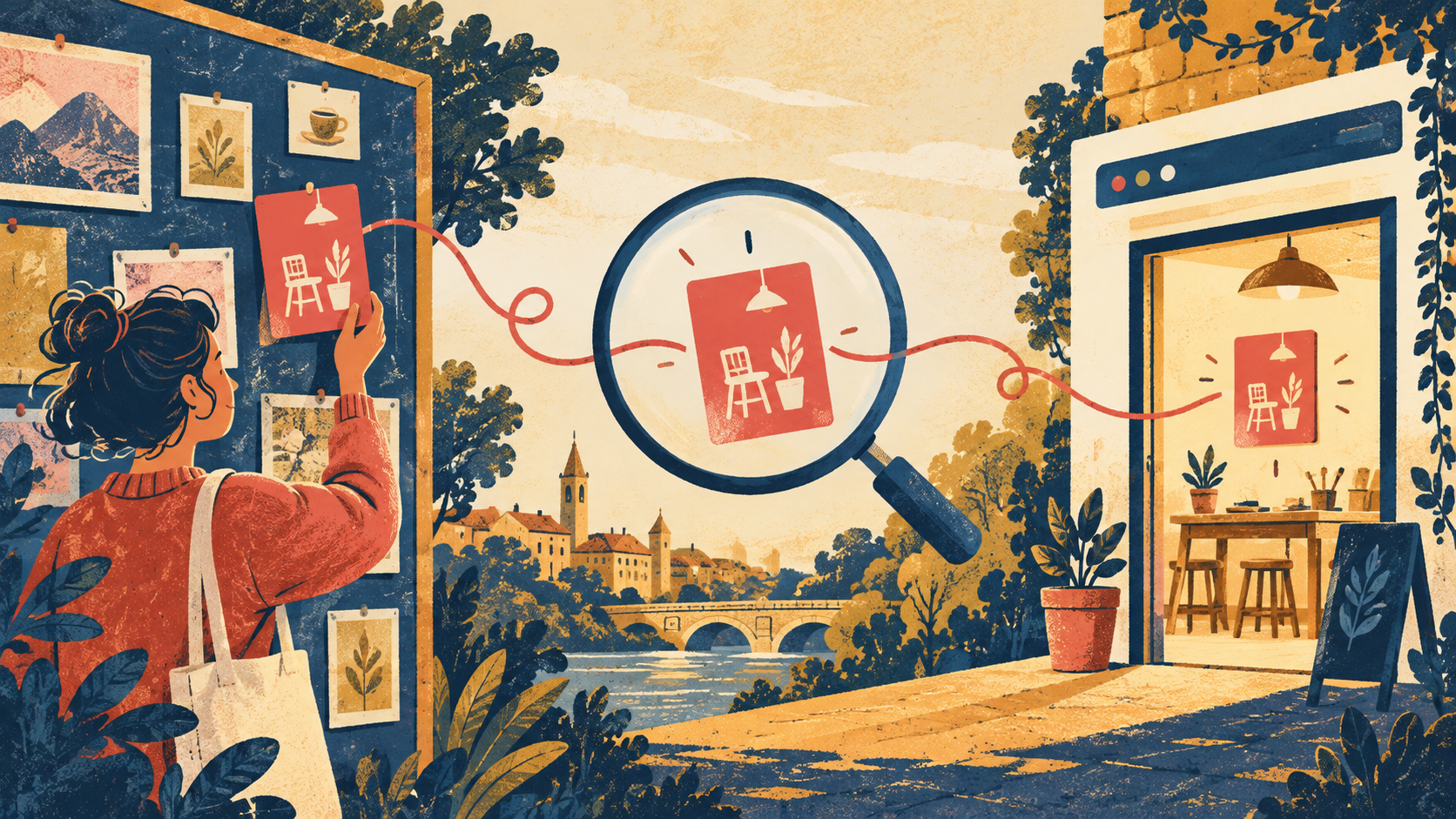
A friend sends you a link to a useful conversation. You tap it. Before you can read the answer, somebody would quite like you to register, open an app, accept a prompt or explain why you are visiting without the correct digital wristband.
It is a strange welcome for something described as a public conversation.
Social networks are becoming more closed off. The walls take different forms, but the direction is familiar: more reasons to stay inside, more conditions on the tools around the platform, and more effort involved in carrying a conversation somewhere else. The walled garden has acquired a reception desk.
For people doing marketing, this is easy to rationalise. Go where the audience is. Learn the format. Work with the platform. All sensible enough, until we forget to ask whether the person at the other end can actually reach the thing we have invited them to see.
The invitation keeps acquiring conditions
I think about social campaigns through the visitor's starting point. Someone searching for a specific answer arrives with a question. Someone encountering a social post may only just be becoming interested. That second person has not necessarily agreed to a miniature onboarding project.
A campaign can have an appealing message and still send them into a frustrating journey. The post looks useful in the app where it was written. Shared elsewhere, its context becomes harder to reach. The customer needs an account, the right client or enough patience to dismiss the invitations surrounding the original invitation.
The same enclosure affects people building around the networks. Reddit's 2023 API announcement introduced paid access for higher-usage third-party applications while retaining defined free access. Today, X's API pricing documentation describes credit-based access and even distinguishes the cost of creating a post with a URL from creating one without it.
Running a large service costs money, and moderation is real work. The consequence still matters: the platform determines the terms on which other tools can connect. Publicly visible content and an open ecosystem are different things.
Over time, those conditions make the network feel less like a collection of paths and more like a shopping centre whose exits have become surprisingly difficult to find.
A follower count is a relationship with conditions attached
The useful part of a social network is the people: the colleague with the helpful example, the customer asking a good question, the small community that has already discussed the problem you have just discovered.
A growing audience can be valuable. It also depends on how the platform lets you reach it. The account total does not tell us how easily someone can find an older explanation, follow a link or keep hearing from us if either side changes networks.
That matters in a marketing review. A response inside one app, a visit to an article and a useful enquiry each answer a different question. When we treat them as interchangeable, the dashboard can look reassuring while the actual route becomes more awkward.
I would put an ordinary question beside the reach chart: could an interested person who does not use this network still understand the offer and find the next step?
A clear website, a readable article and an email subscription people deliberately choose are still useful foundations. Give the full explanation a dependable address. Let social posts be several ways of finding it. The account can be an introduction without becoming the only place the explanation exists.
Moot is an interesting way to keep more doors open
Moot is an alternative worth looking at in that context. It combines public discussions and communities with tools for bringing activity from other social networks into a shared place. Its manifesto describes ordinary public threads readable without an account and exports that let people take their contributions away. Its public API is documented and available for building other tools.
It is also helpful for crossposting content across several social networks at once. Moot's browser extension publishing options let you enable multiple destinations and publish a Moot post outward through the accounts signed in to that browser. You can keep a presence in existing networks while making the same contribution available on Moot.
The current documentation names X, Threads and Bluesky for text and media. Instagram needs an image or video; Reddit publishing uses the corresponding community's subreddit and currently handles text posts. Long text can become an excerpt linking to the complete Moot post. Those format differences matter when planning a useful announcement.
The appeal is practical. A small team could give a new guide a public home, use one publishing workflow to reach several connected accounts, and spend more of its time on the explanation and the replies. Moot is young, and browser-based integrations depend on the source sites continuing to work as expected. I would start with a modest publishing routine and check the results.
Crossposting also leaves room for editorial judgement. A community encountering the subject for the first time needs a little context. People already familiar with the work may want the specific change. Keep the central promise consistent and make sure the destination delivers it.
There are still people opening gates
The social web has possibilities beyond the biggest enclosed feeds. Meta's own explanation of the fediverse describes how independent servers can exchange public conversations. Blogs still link to other blogs. Newsletters still introduce people to work elsewhere. Small communities still manage the apparently radical feat of letting someone read a discussion before demanding a relationship.
None of this requires declaring every established network useless. It does mean choosing where the durable version of our work lives, how people can find it and how easily they can leave with something valuable.
For marketers, that can be a pleasantly ordinary job. Publish something worth reading. Give it an address that works. Make the invitation clear. Show up when somebody replies. Use tools that reduce the repetitive work, then spend the saved time having a better conversation.
There is still hope for the internet. It's not dead yet. The gardens just need a few more gates. I suggest we leave ours open and put the kettle on.

A thought worth keeping?